
01
Step One
Identify
Define your concern, treatment goals, health history, and previous care.
Cell source, preparation, intended use, method of administration, evidence, and regulatory status can differ. Knowing exactly what is being proposed is essential before making a decision.
People explore regenerative treatments for different reasons. Because stem cell products and procedures can vary significantly, your specific concern should be evaluated before any treatment is recommended.
Some patients explore regenerative approaches as part of a broader conversation about age-related changes and wellness.
Patients may seek information about regenerative approaches for musculoskeletal concerns, although suitability depends on the diagnosis and specific therapy.
Difficulty with comfortable movement should be properly evaluated before deciding whether regenerative treatment belongs in the care plan.
Ongoing discomfort can have many causes and requires an appropriate assessment rather than assumptions about one solution.
Some patients are interested in how regenerative medicine is being studied in relation to tissue repair and recovery.
Patients may investigate regenerative approaches when looking for alternatives to more invasive procedures.
Others simply want to understand whether newer regenerative therapies have a reasonable role in their individual situation.
The phrase “stem cell therapy” is often used broadly. A responsible consultation should identify the specific product or cellular preparation, where it comes from, how it is processed, how it is administered, and what evidence supports its intended use.
Stem cells are cells with the ability to self-renew and, depending on their type, develop into certain specialized cell types.
No. Cell type, source, processing, administration, intended use, and regulatory status can differ substantially.
No. PRP is a platelet-concentrated preparation derived from blood. It should not be described as a stem cell treatment.
Regenerative medicine is a broad field studying approaches intended to repair, replace, or support damaged cells, tissues, or biological function.
FDA approval depends on the exact product and intended use. Many stem cell products marketed for orthopedic, neurologic, wellness, and other conditions are not FDA-approved for those uses.
No. The source alone does not establish whether a cellular product or its intended use meets FDA requirements.
Broad cure claims should not be made. Evidence and regulatory status vary substantially according to the specific product and condition.
Ask about the exact product, cell source, processing, intended use, clinical evidence, regulatory status, possible alternatives, and known risks.
There is no responsible universal list of areas that every stem cell treatment can address. The specific product, intended use, available evidence, and individual assessment should determine whether treatment is considered.
Your consultation begins by identifying the specific concern rather than assuming cellular treatment is appropriate.
Joint or soft-tissue concerns require proper assessment before regenerative options are discussed.
Some regenerative approaches involve targeted administration rather than whole-body treatment.
A history of injury does not automatically make someone a candidate for cellular therapy.
Age alone is not an indication for a particular stem cell procedure.
Previous injections, procedures, surgery, or regenerative treatments should be disclosed during consultation.
The treatment area cannot be separated from medical history, medications, diagnosis, and general health.
Rather than starting with a list of conditions that stem cells supposedly treat, New U Med Spa begins with your concern and evaluates whether the specific treatment offered has an appropriate role.
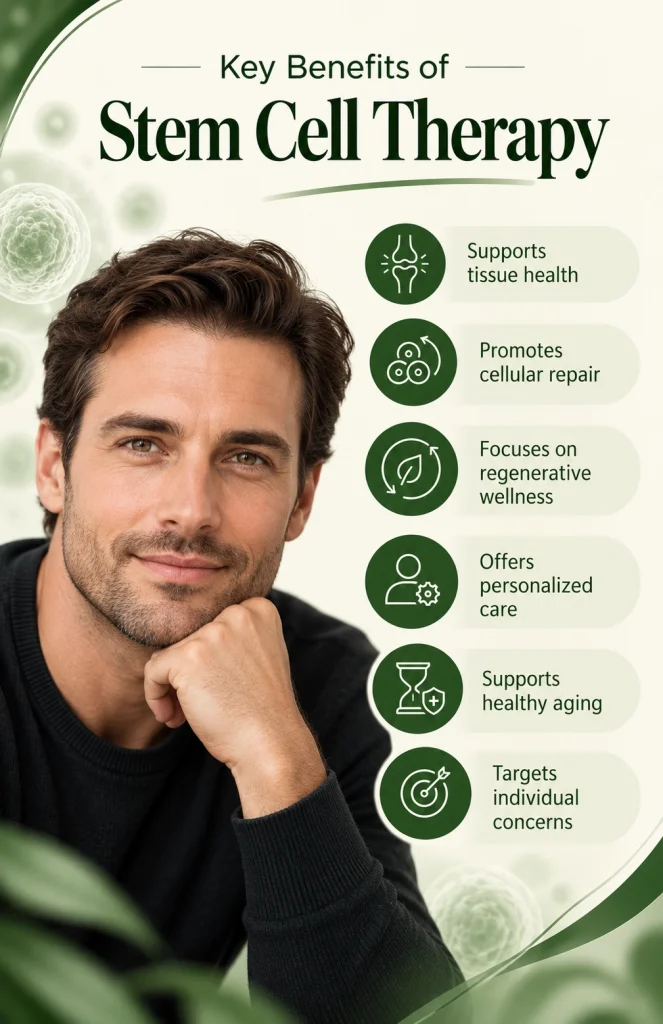
Regenerative medicine is evolving quickly. Its potential should be discussed alongside the limitations of current evidence and the characteristics of the specific therapy being considered.
Individualized Assessment
Treatment discussions begin with your health history, concern, and goals.
Specific Treatment Identification
Patients should understand exactly what product or preparation is being proposed.
Non-Surgical Possibilities
Certain regenerative procedures may be administered without traditional surgery.
Targeted Treatment Planning
When appropriate, treatment can focus on a specific area rather than making broad whole-body claims.
Evidence-Based Discussion
Available research should be considered according to the exact product and intended use.
Realistic Expectations
Treatment should never be presented as a guaranteed cure or universal solution.
Alternatives Can Be Considered
A consultation should include other reasonable options when appropriate.
Informed Decision-Making
Benefits, limitations, regulatory status, risks, and alternatives should be understood before proceeding.

Discuss why you are considering stem cell therapy, your symptoms or goals, medical history, and previous treatments.
Understand the specific cellular or regenerative product, its source, intended use, and how it would be administered.
Your provider should discuss whether the proposed treatment is appropriate and what evidence supports its use for your concern.
Review potential benefits, risks, alternatives, recovery expectations, and regulatory considerations before deciding whether to proceed.
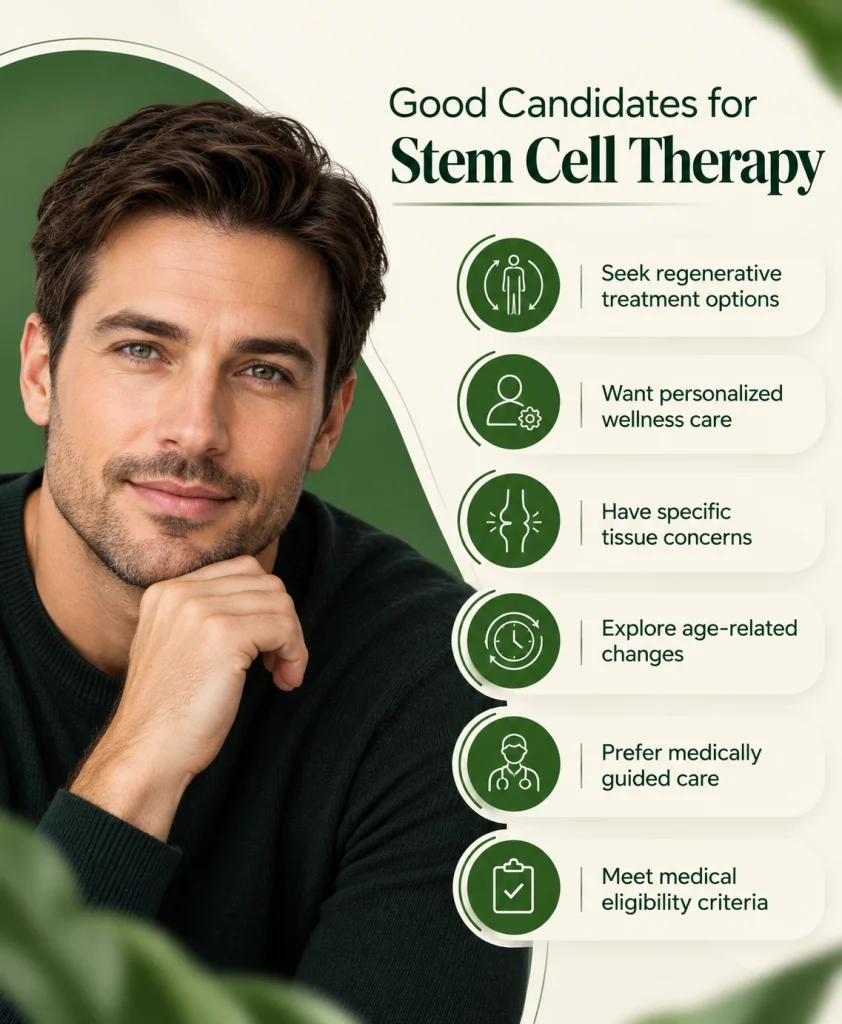
Stem cell therapy should not replace established medical care without appropriate evaluation. Patients should be especially cautious of treatments promoted as cures for many unrelated diseases or conditions.
At New U Med Spa, your regenerative treatment discussion should clarify the product being considered, its source, intended use, potential benefits, limitations, risks, and alternatives before you make a treatment decision.
The process should be built around informed decision-making rather than assuming that every patient seeking stem cell therapy should receive it.
Define your concern, treatment goals, health history, and previous care.
Review the specific regenerative treatment and determine whether it is appropriate.
Understand evidence, risks, alternatives, regulatory considerations, and expected recovery before proceeding.
Monitor recovery and response according to the treatment plan provided.
There is no universal aftercare plan for “stem cell therapy.” Recovery depends on the product, source, method of administration, treatment area, and individual health factors.
Use the aftercare guidance provided for your exact treatment rather than generic online recommendations.
Temporary discomfort or other local effects may occur depending on the procedure performed.
Unexpected or worsening pain, swelling, redness, fever, neurologic symptoms, or other significant changes require prompt medical attention.


Risks depend heavily on the exact cellular product, how it is processed, where it comes from, and how it is administered. Potential concerns can include infection, contamination, immune or inflammatory reactions, injection-related injury, and other product-specific complications.
Regulatory status matters as well. Cellular products that do not meet applicable requirements may be regulated as drugs and biological products and can require FDA premarket authorization.




Choosing a stem cell clinic should involve understanding exactly what is being offered. New U Med Spa in Dr. Phillips provides individualized consultation so patients can discuss their goals and the specific regenerative approach being considered.
Recommendations begin with your concern, history, and suitability.
Understand the proposed therapy rather than relying on broad “stem cell” terminology.
Visit our Orlando location to discuss the treatment, expectations, and whether it may be appropriate for you.

Understanding the exact treatment is especially important in regenerative medicine because products marketed under similar names can be very different.
The term broadly describes treatments involving stem cells or stem-cell-related cellular products. The exact cell source, processing, administration, and intended use can differ significantly.
It depends on the exact product and intended use. Many cellular products promoted for orthopedic, neurologic, wellness, and other uses do not have FDA approval for those applications.
No. PRP is prepared from blood and concentrates platelets. It should not be represented as a stem cell product.
Start with an appropriate evaluation of your concern. Then ask what exact product is being proposed, what evidence supports that particular use, its regulatory status, risks, and reasonable alternatives.
Patients should be cautious of broad cure claims. Whether a cellular therapy has evidence for a particular condition depends on the exact product and use, and many marketed applications remain unapproved or investigational.
If you’re considering stem cell therapy in Orlando, schedule a consultation at New U Med Spa in Dr. Phillips. Discuss the specific treatment offered, your goals, suitability, available evidence, risks, regulatory considerations, and alternatives before deciding what comes next.